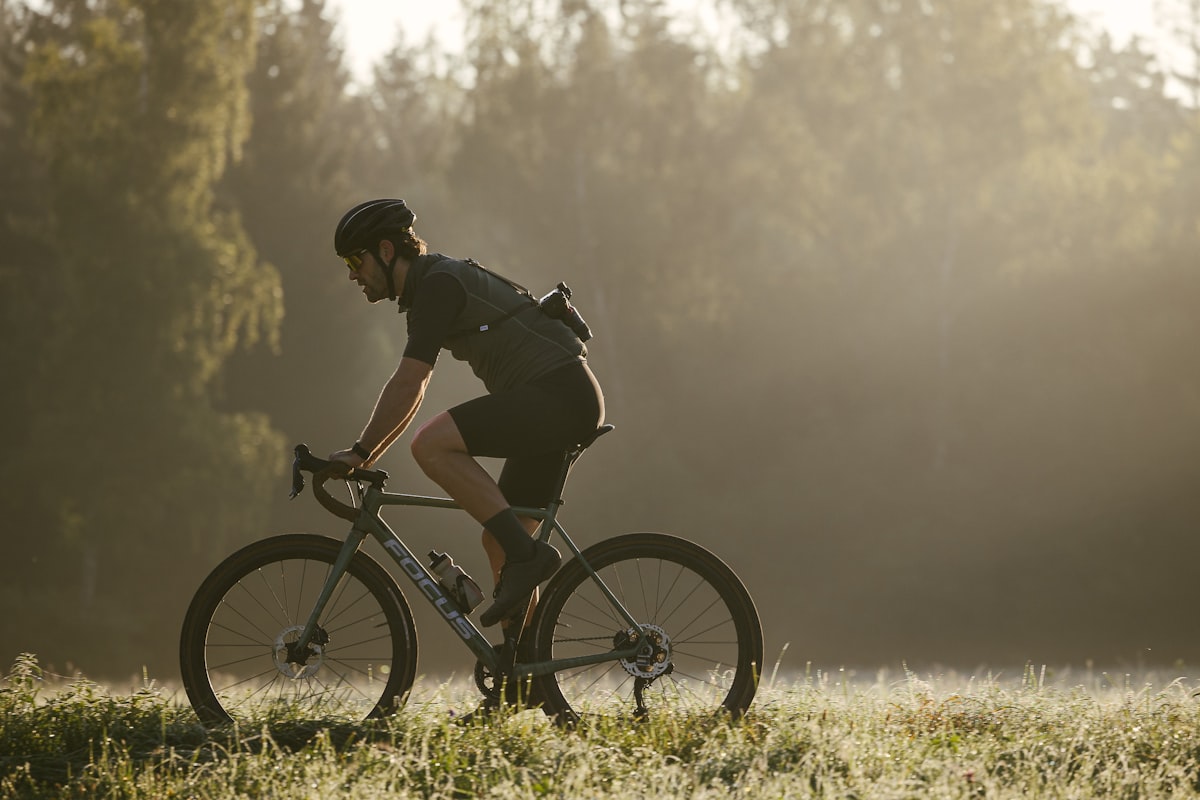
Gravel Cycling in Scotland: A Guide to Riding the Highlands
Scotland occupies a particular space in the cycling imagination. It’s both accessible—a flight or a ferry from Denmark—and genuinely remote. The Highlands are vast, mountainous, and sparse. Weather is unpredictable and often dramatic. The roads, including the gravel roads, follow routes carved through generations of practical use rather than modern planning. For the experienced gravel cyclist looking for something genuinely different from the Mediterranean sun and established cycling infrastructure of southern Europe, Scotland is revelatory.
The concept of riding from the Atlantic to the North Sea appeals to something fundamental. You start on the wild west coast, pass through high mountain terrain, and emerge on the east side—a journey that has geographical and psychological logic. This isn’t a lap of familiar hills. It’s a crossing of genuinely significant terrain. Scotland Highlands Gravel runs in September, a window that captures late summer light and transitional autumn weather. This guide explores what makes the Highlands work for gravel cycling, what the riding is actually like, and what to expect when you commit to a week in one of Britain’s most wild landscapes.
The Scottish Highlands: Geography and Character
The Scottish Highlands cover roughly the northern two-thirds of mainland Scotland. They’re defined by mountains, glens (valleys), and a sparse population. Unlike the Alps or the Pyrenees, which are defined by elevation and technical climbing, the Highlands are defined by remoteness and vastness. Individual peaks might not be particularly high—Ben Nevis, the highest mountain in Scotland, is only 1,345 metres—but the terrain is severe, the weather is changeable, and the landscape is empty in a way that focuses your attention.
The Highlands were shaped by ancient geology and dramatic weather. Valleys run deep, ridgelines are sharp, and water is everywhere—streams, lochs (lakes), and the constant presence of moisture. This landscape is not forgiving. It’s also genuinely beautiful in a way that bypasses aesthetics and lands in something more primal. The light at high latitudes (Scotland is at roughly 57°N) is particular and dramatic. In September, daylight is still long—dawn before 6 am, dusk after 8 pm—but with a quality of light that’s different from summer. Angles are lower, shadows deeper, and colour is more pronounced.
Population in the Highlands is sparse. You can ride for hours and see only a few people. Villages exist, often at the heads of glens, but they’re genuinely small—places of a few hundred people where tourism is supplementary to actual livelihood. This emptiness is part of what makes Highland riding unique. You’re not passing through settled, managed landscapes. You’re passing through country that’s still defined by weather, elevation, and the presence of wildlife.
Mountains Without Technical Climbing
Here’s what’s important to understand about Highland climbing: it’s not technical. You won’t be dealing with Alpine hairpins or sustained, focused mountain passes. Instead, you’ll be riding through broad mountain terrain, often on passes that take hours to cross. A typical pass might involve 500–800 metres of elevation over 10–15 kilometres—steady, grinding climbing rather than steep intensity.
What this means is that the challenge is endurance and consistency rather than power. Your ability to maintain effort for hours matters more than your ability to produce a high peak effort. If you can settle into a sustainable pace and hold it for a significant duration, you’ll cope with Highland riding. If your strength is short, intense efforts, you’ll find the grinding sustained climbs less suited to your natural riding style.
Descents are equally non-technical. You’re not navigating through rock gardens or technical switchbacks. Instead, you’re descending into valleys via broad, gravel tracks that can be quite fast if conditions are dry. Wet conditions change this—loose gravel on steep descents demands attention—but the basic pattern is straightforward riding rather than technical complexity.
Roads, Tracks, and Surfaces
This is where Scottish Highlands cycling gets interesting. The surfaces you’ll encounter are varied in a way that’s quite different from Mediterranean gravel destinations. Scotland has been inhabited and crossed for thousands of years, and the infrastructure reflects this—ancient drove roads, military roads built by the British Army in the 18th century, old estate tracks, and modern gravel roads all coexist.
A typical day will include: Sections of single-track road, most of which are narrow paved tarmac (one lane with passing places). Proper gravel roads in good condition—well-maintained, relatively smooth, and ride-able at a reasonable pace. More technical gravel and stone track that requires attention to line choice and tyre pressure. Sections of what looks like dirt road but is actually quite consolidated and ride-able. Occasionally, short sections of what could generously be called “rough track” where you’re essentially hike-a-biking or walking.
The variation is constant. You might ride 10 kilometres of smooth gravel, then shift into single-track road for 8 kilometres, then encounter a technical track section that demands careful navigation. This mixture is actually ideal for gravel cycling—it’s interesting, never monotonous, and requires engagement without pushing you beyond reasonable bounds.
What Scottish Gravel Actually Feels Like
Scottish gravel is not Mediterranean limestone. It’s often mixed stone, sometimes quite coarse, sometimes with finer material binding it together. In dry conditions, it can be fast—good traction and predictable rolling resistance. In wet conditions, it becomes slippery and loose. This is important because weather is a factor in Scotland in a way it isn’t in southern Europe.
The single-track roads deserve special attention. These are official public roads, but narrow—typically five to six metres from edge to edge. They usually have passing places every half-kilometre or so, where drivers can pull over to let opposing traffic through. On a bike, they’re fine. Traffic is minimal anyway. You ride down the middle when it suits you, pull over if a car approaches. It’s low-stress and becomes quite pleasant once you adjust to the rhythm.
The technical track sections are real, but not extreme. You’ll encounter rough stone, ruts from vehicle traffic, sections that are quite loose, and places where water is running across the track. It’s manageable on a gravel bike, but it demands attention. Line choice matters. Tyre pressure matters (lower pressure for better traction, higher pressure for rolling speed—it’s a constant calibration). And you need to be willing to dismount occasionally if something is genuinely unrideable.
Weather: The Variable Factor
Here’s something to understand before you commit to Highland cycling: weather matters, and it changes. September in Scotland is genuinely unpredictable. You can experience four seasons in a single day. You might ride in sunshine in the morning, encounter rain in the afternoon, and have clear skies again by evening. Alternatively, you might wake to mist so thick you can’t see 30 metres ahead, and it might stay that way all day.
This is not a complaint; it’s a reality. The Highlands get weather systems coming from the Atlantic, and mountains force that weather up, which means clouds, wind, and rain are genuine factors. But this variability is also part of what makes Highland cycling distinctive. You learn to be adaptable, to dress in layers, to manage wet conditions. And when the mist clears and sun breaks through, the landscape is revealed in a way that’s more dramatic precisely because the weather is changeable.
September is a good month partly because you’re past the worst of summer rain (which is relatively rare anyway) and not yet into the full autumn storms of October and November. You should expect some rain, but you should also expect plenty of riding days with decent conditions. An eight-day tour is long enough that weather will vary—you won’t get eight perfect days, but you also won’t spend the whole tour wet.
Wind and Exposure
Wind in the Highlands is a real factor. You’re on high passes, often exposed terrain with little shelter. When wind is coming hard from the Atlantic, it can be tiring. But wind is directional; the route is planned with this in mind. Some days will feel windy, others won’t. It’s not like riding into a constant headwind for hours—weather systems move through, and the landscape provides some shelter in valleys.
Exposure is real. If you have issues with heights or exposed terrain, some Highland sections will feel intense. You’re often riding on high passes with long views and drop-offs. But they’re not Alpine cliff-edge situations. They’re grassy, broad slopes with serious exposure but not extreme technical hazard. It’s worth knowing about yourself—if steep side slopes make you anxious, acknowledge it. It’s not a reason not to go, but it’s something to prepare mentally.
The Landscape and What You’ll See
Scottish landscape is distinctive. It lacks the lush green of southern England and the managed aesthetic of lowland farms. Instead, you see open moorland—mountains without trees, rolling expanses of heather and grass, and valleys with rivers and streams. Forests exist but are often plantations rather than natural woodland. What dominates is space and openness.
The colour palette is muted—browns, greys, purples from heather, green grass, and the dramatic greys of rock. When sun comes through mist and illuminates the landscape, it’s stunning precisely because the light is rare and conditional. You understand landscape differently when weather is variable. On a bright Mediterranean day, the landscape is revealed all at once. In Scotland, it’s revealed progressively, conditionally, and the revelation feels earned.
Wildlife exists but is mostly not immediately visible. You might see red deer on slopes (genuinely beautiful creatures), golden eagles if you’re lucky, and red squirrels. More likely, you’ll see tracks of animals but not the animals themselves. The wilderness is real without being aggressively obvious.
The Villages and Places You’ll Pass Through
Highland villages are genuine communities, not tourist decorations. You might pass through places with populations of 500–1,000 people where tourism is one strand among others. These villages often sit at the heads of glens, where geography naturally produces settlement. They have shops (small but functional), pubs (genuinely worth stopping in), and accommodations. You’ll stay in hotels in larger towns and smaller guesthouses in smaller places.
Scottish hospitality is genuine. People are friendly and interested in why you’re there. Conversations happen in pubs over a drink. You’ll hear stories about local geography, history, and wildlife. There’s a sense of place in Highland communities that’s distinct from purely touristy destinations—you’re visitors, but you’re also welcome as people genuinely interested in the area.
One thing to note: these are real communities with real infrastructure constraints. Shops have hours. Restaurants might not be open every day. This isn’t a complaint—it’s how places work when population is low. But it means you’re not in a zone of endless consumer choice. You eat what’s available, and that’s fine. It makes the experience feel more authentic.
The Atlantic to North Sea Concept
Scotland Highlands Gravel follows the concept of crossing from the Atlantic coast in the west to the North Sea coast in the east. This is more than a marketing concept—it’s a real geographical and psychological journey. You start on the wild western coast, pass through high mountain terrain, and emerge on a different coastline with different character.
The western coast is dramatic and exposed. You might start in a place like Wester Ross, where mountains come down to sea and the Atlantic provides a constant weather source. The riding takes you inland, up through Highland valleys, and over high passes. By mid-week, you’re in high mountain terrain, far from any coast. Then the route descends eastward, gradually moving toward lower ground, and you emerge on the North Sea coast—a completely different environment, calmer, more populated in the relative sense, but still remote.
This progression makes sense geographically. It’s not arbitrary. You’re essentially following the grain of the landscape, moving from one major watershed to another. It gives the tour a natural structure and logic—you’re not just riding in circles; you’re crossing something significant.
Fitness and Pacing
An eight-day Highland tour is a significant undertaking. You’re looking at daily distances typically between 50–80 kilometres, with elevation gain ranging from 600 metres on lighter days to 1,000+ metres on heavier days. Over the course of the week, you’ll climb 5,000–7,000 metres of cumulative elevation. It’s not superhuman, but it’s real work.
The nature of the climbing is important. It’s not a single big effort each day; it’s sustained, grinding elevation over hours. This is why experience matters. If you’ve ridden century events or multi-day self-supported tours, you understand your body’s pacing and what sustainable effort feels like. If your experience is primarily shorter, faster rides, you might find the sustained nature of Highland cycling challenging initially.
That said, the pacing is designed to be manageable for experienced amateurs. You’re not racing. You’re not trying to set speed records. You’re moving through landscape at a speed that lets you engage with it. On a good day, you might ride at a conversational pace for hours. On a harder day with significant elevation, you’ll work harder but still sustainably.
Training for Highland Cycling
Preparation should focus on consistent, sustained riding. Efforts of 4–6 hours at moderate intensity are more relevant than short, intense intervals. Riding on varied terrain helps—if you have access to gravel or rough roads, use them. Hill work is important, but more valuable is learning to pace sustained climbing rather than attacking it hard.
Mental preparation is equally important. Highland cycling requires adaptability and acceptance of variability. If you need perfect conditions and guaranteed comfort, this might not be the ride for you. If you’re okay with weather, with physical effort, with genuine wilderness, then you’re well-positioned to enjoy it deeply.
Why Danish Gravel Cyclists Love Scotland
For cyclists from northern Europe—particularly from relatively flat, managed landscapes—the Highlands offer genuine wildness. Scotland is accessible (short flight, English language, familiar culture) but feels genuinely remote. You’re not in a tamed cycling destination; you’re in country that’s still defined by landscape and weather rather than tourism.
There’s also something about the light and the landscape that resonates with northern European sensibilities. The palette is not dissimilar to Scandinavian landscapes—moorland, mountains, sparse vegetation. But it’s more dramatic, more extreme in its emptiness and scale. For experienced cyclists, this rawness is appealing precisely because it demands something from you—adaptation, acceptance, engagement.
And then there’s the simple fact: riding across the Highlands is genuinely interesting. The terrain varies enough to keep you engaged. The routes have logic and flow. The weather creates drama and story—it’s not a perfectly controlled experience. When you finish a week of Highland cycling, you haven’t just completed a tour; you’ve done something that required actual adaptation and effort.
Practical Considerations
Getting to the Scottish Highlands from Denmark involves a flight to Glasgow or Edinburgh (typically 3–4 hours from Copenhagen, often with one connection) and then transfer to the Highlands. This is more complex than reaching Cyprus, but not dramatically so. You’ll arrive tired but can usually rest a day before the tour starts, allowing for bike setup and acclimatisation.
Bring your bike, obviously. Scotland is on the left side of the road, which is just something to accept. Everyone does. Traffic is minimal anyway, particularly once you’re on gravel roads. Phone coverage is generally fine even in remote areas, though there are patches of no signal—again, just something to accept.
Accommodation is arranged as part of the fully serviced tour. Hotels and guesthouses are comfortable; they’re not luxury, but they’re good. Food is straightforward British/Scottish—meat, vegetables, potatoes. Whisky is excellent if that’s your thing. Coffee is better than it used to be. You won’t eat badly, though the cuisine is more functional than refined.
Gear and Bike Setup
Your bike should be set up for mixed terrain. Tyres should be robust and capable of handling both smooth gravel and rougher track—something like 45–50mm gravel-specific tyres works well. If you’re running wider tyres, that’s fine too; clearance on a gravel bike usually allows 50mm+ without issues. Lower pressure than you’d run on pure road (maybe 70–80 psi) gives you better traction and comfort on rough surfaces.
Mechanically, your bike should be dialed in before you leave Denmark. Brakes should modulate well and feel confident. Drivetrain should shift crisply. Cables might stretch during a tour; any existing looseness will get worse. It’s worth having everything checked by a mechanic before you go.
You’ll carry a small toolkit: pump, spare tube, multi-tool, chain lubricant, and maybe a small first aid kit. Mechanical failures are rare, but they happen. Flats are the most likely issue, so being able to fix a tube is important. The support vehicle can help with major problems, but self-sufficiency is valuable.
Clothing and Weather Management
This is important: dress in layers. You’ll wake to cool, potentially wet conditions, start riding, warm up, potentially encounter rain, then cool down again by evening. Having layers lets you manage this. A light, packable rain shell is essential. Shorts with good chamois are important since you’re sitting for hours. A jersey is better than a shirt because of the pockets and the fit. Shoes that work for walking are valuable because you’ll walk occasionally, both off-bike and through villages.
September weather in Scotland requires thinking about temperature variation. Morning temperatures might be 8–10°C; afternoon could be 18–20°C. Wind can make conditions feel cooler. Rain can be a short shower or extended. Preparing for this variability is key. Once you’re riding and generating heat, you’ll shed layers. At rest, you’ll want them.
What Fully Serviced Means in the Scottish Context
Fully serviced in the Highlands is particularly valuable because logistics are complex. Accommodation is arranged in advance—guesthouses and small hotels chosen for their location and quality. Luggage transport means you ride with minimal load, which is important for consistency across eight days in variable terrain. The support vehicle is particularly useful in Scotland because weather and terrain are unpredictable. It’s reassuring to know help is available if weather becomes difficult or if you’re simply struggling with the day’s effort.
Daily briefings provide maps, route suggestions, and local information. You’re not locked into a specific path, but you have structure. In a landscape as vast as the Highlands, having suggested routes and information about terrain is valuable. It lets you make informed choices about pace and routing rather than guessing.
The combination of support infrastructure and landscape freedom is unique. You have enough structure to feel secure, but enough freedom to explore and adapt. This is the sweet spot for serious amateur cycling.
Closing Thoughts
The Scottish Highlands are not everyone’s cycling destination. They don’t offer the consistency of Mediterranean climates, the established infrastructure of Alpine regions, or the ease of flat, familiar touring. What they offer instead is genuine wilderness, varied terrain, dramatic landscape, and the satisfaction of crossing something significant on a gravel bike.
For the experienced gravel cyclist looking for something distinctive—something that demands adaptation and offers real reward—the Highlands are remarkable. You’ll ride in weather, over terrain that varies constantly, through landscapes that are genuinely wild. You’ll understand why these mountains shaped history and why they continue to define Scottish identity. And when you finish, you’ll have a story worth telling and a week you won’t forget.
If you’re ready for gravel cycling that’s real, rewarding, and genuinely different, Scotland Highlands Gravel deserves serious consideration. The Atlantic is waiting. The mountains are there. The roads are ready.